
When America Fed The World
How Truman turned bread & booze into diplomacy

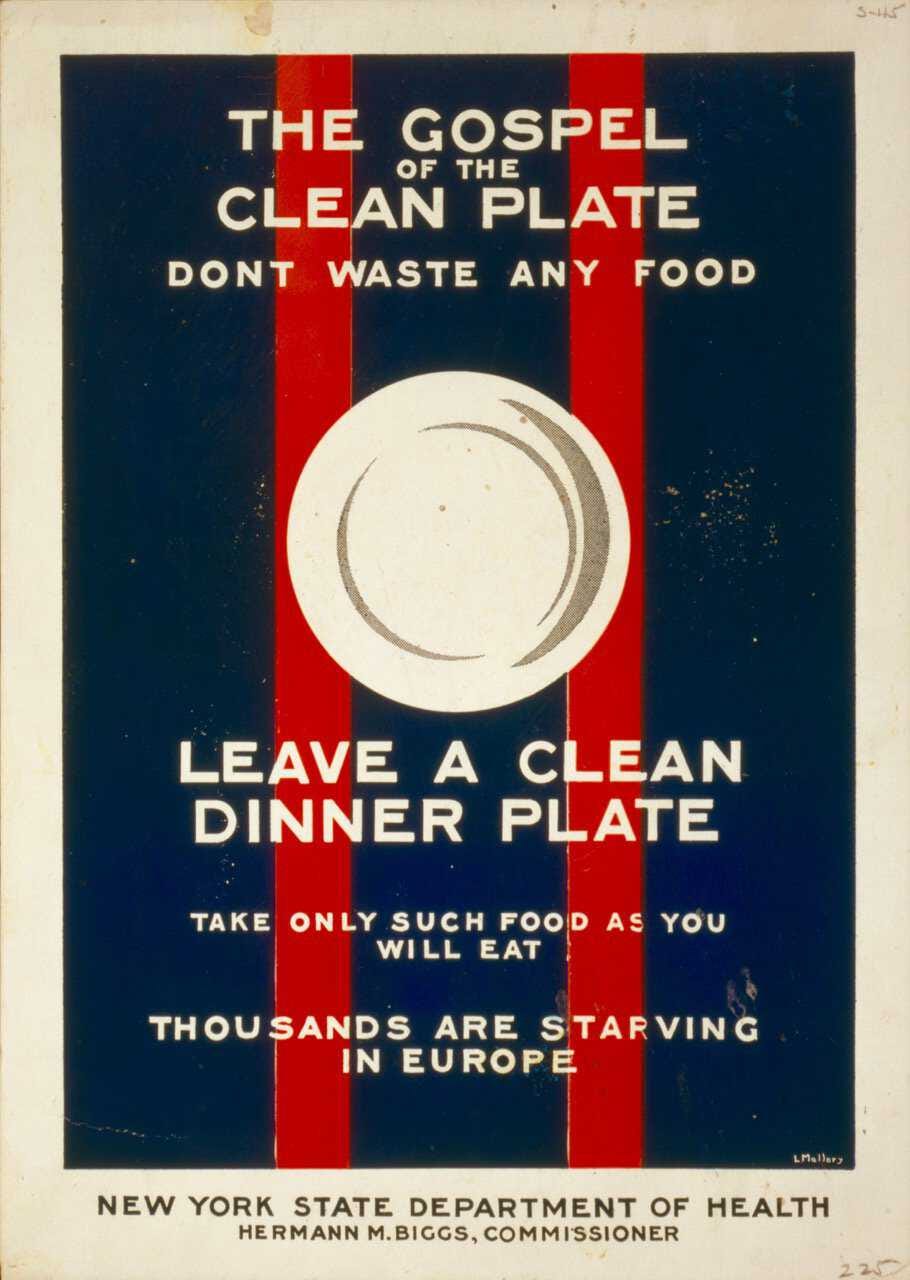
The Clean Plate Doctrine
“Eat your food! Don’t you know there are starving kids in Europe?”
I know I’m not the only one who grew up hearing some version of that admonishment. Maybe the starving kids were in Asia or Africa, but they were out there, and if you didn’t eat all your veggies they were going to die.
That phrase powered generations of American dinner table conversations. It also, for a brief moment, powered American foreign policy.
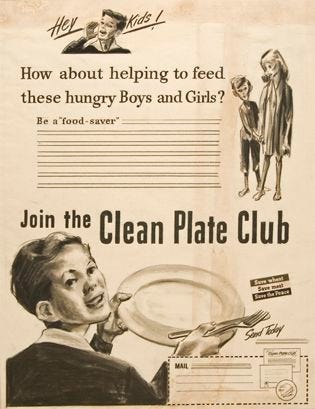
But do you know when such expressions became common? Let’s talk about the Clean Plate Club.
In 1946, U.S. President Harry Truman was focused on a dire humanitarian situation, about as deadly a global food crisis as anyone could remember. Extreme shortages across places like Europe, North Africa, and far East Asia resulted from war-ravaged farmland and devastating droughts.
In an official statement, Truman said:
“More people face starvation and even actual death for want of food today than in any war year and perhaps more than in all the war years combined.”
On the heels of WW2, most wheat-producing countries of the world (outside of the U.S. and Canada) were experiencing an almost total crop failure in wheat.
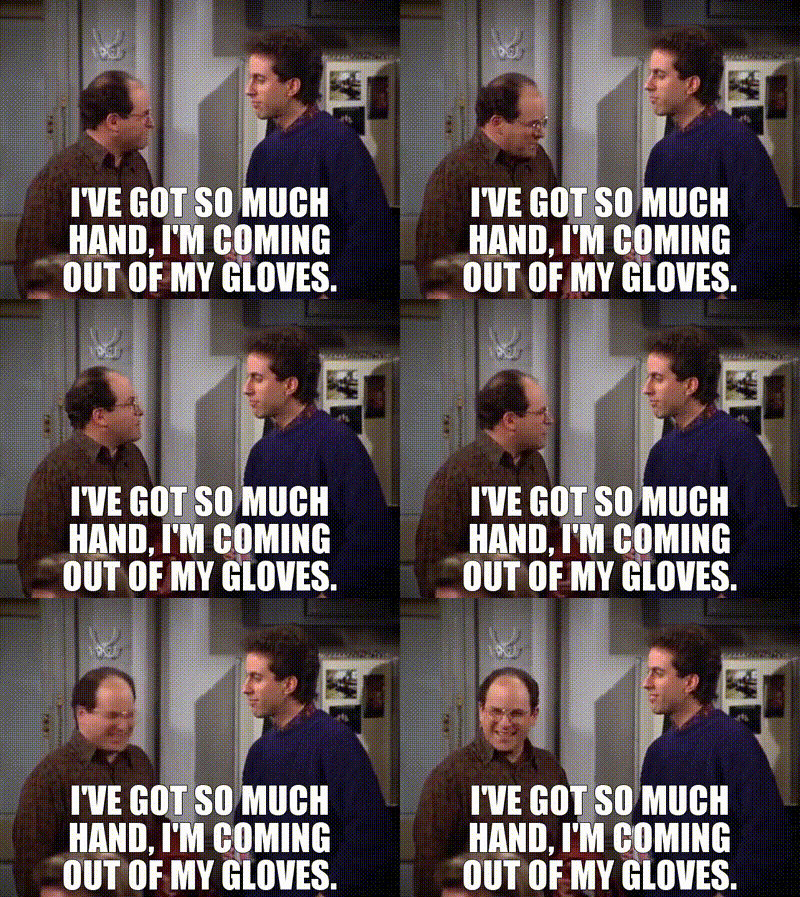
America was sittin’ pretty after making the world “safe for democracy.” We had grain. We had ships. We had HAND!
But many nations were in trouble.
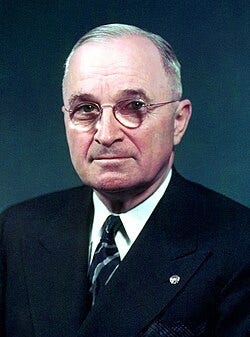
As Truman said, “misery and want” were breeding grounds for authoritarian influences.
The Truman administration inaugurated a program to ship six million tons of wheat in the first half of 1946. That’s a lot. The goal was to export wheat and other food products to “provide 50 million people with a diet of 2,000 calories a day, or 100 million with 1,000 calories a day for a 6 months’ period.”
WHEAT in the world are you talking about HARRY?
Military officials at the time warned not to let a people’s daily intake drop below 1,100 calories, which they said was the threshold for food riots and total social collapse.
Truman said Americans caloric intake was an enviable 3,300 a day.
“The situation is so serious that we felt it was absolutely essential to take every measure possible to help keep the people in these countries from starving; because in those countries, which are our friends and allies, they are not to blame for the situation.
And in enemy countries we can’t afford to see our enemies starve, even if they did bring this situation on themselves. We can’t do that and live according to our own ideals.”
Scientists and agriculture experts were consulted, and their recommendations actually shaped policy. A radical concept, I know.
The nation knew much about adapting on the home front and carrying out successful global operations. America would mobilize to feed the world.
Truman rolled out the “kitchen-table diplomacy” playbook from World War 1, even bringing former President Herbert Hoover out of retirement.
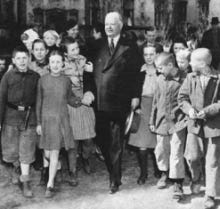
Hoover had overseen humanitarian aid efforts during The Great War and help the country play some greatest hits:
The “Clean Plate Club” became a national obsession. Schools and parents admonished children that every scrap of wasted food was a “betrayal” of a starving child in Europe or Asia.
Forget Taco Tuesday. Families were asked to observe “Meatless Tuesdays” and “Wheatless Wednesdays.”
Truman ordered millers to increase the “extraction rate” resulting in a slightly darker, denser “Emergency Bread” known as “Truman Bread.”
The government asked bakers to reduce the weight and size of loaves and rolls.
Truman drastically curtailed the amount of grain available to brewers and distillers, leading to a temporary “beer shortage” in 1946, which was seen as a necessary sacrifice for the famine effort.
Restaurants were asked to stop serving bread and butter unless specifically requested and to limit the number of crackers served with soup.
The campaign was a marketing masterpiece. By framing conservation as a patriotic duty rather than a legal requirement, America managed to ship more food in 1946 than the U.S. had during any single year of WW2.
During his presser, Truman said this:
“I don’t think there will be anybody who isn’t anxious to keep people from starving to death. It’s un-American, I think, to have the idea to let people starve.”
Even the Germans, who were still referred to as “the enemy” less than a year after the liberation of Europe.
Ulterior Motives? Sure…
Look, the U.S. had major issues at the time. Society was far from equitable. Labor strife was significant. Truman hadn’t even desegregated the military yet.
And sure, the U.S. benefitted. The strategic underpinnings of the “Save Wheat” campaign were deeply tied to the emerging Cold War. Food was seen as a powerful propaganda tool. It cast the U.S. as a benevolent power.
Beyond preventing enemies from gaining ground, the program aimed to support world trade, which directly benefited American farmers and businessmen.
But that’s also kind of an important point. By marshalling our resources to do the American thing, which meant taking the lead in order to save lives, the country also benefitted.
As Truman said, “misery and want” were breeding grounds for authoritarian influences.
A desperate population was more likely to trade democratic freedoms for the stability promised by authoritarian regimes, like the Soviet Union.
Steppin’ Up To The Plate
By the summer of 1946, President Truman announced that the “world famine emergency had been met.”
While it didn’t eliminate all suffering, it effectively dispelled the immediate threat of global mass starvation.
In Japan alone, U.S. food aid fed up to 20 million people during the peak months of 1946, with occupation authorities estimating it saved 11 million lives.
By providing stability, the stage was set for the massive European Recovery Plan, commonly known as The Marshall Plan, a year later.
We tell children to clean their plates because somewhere, someone is hungry.
In 1946, that wasn’t just a line parents used at dinner. It was national policy.
We were imperfect, strategic, and self-interested. But we were also unwilling to let millions starve when we had the means to help. Even our enemies.
That’s worth remembering.
The Clean Plate Club wasn’t just about guilt. It was about responsibility. And once upon a time, we chose to carry it.
LEFTOVERS
“The measures which I have directed will no doubt cause some inconvenience to many of us. …However, these inconveniences will be a small price to pay for saving lives, mitigating suffering in liberated countries, and helping to establish a firmer foundation for peace.
In attempting to alleviate the famine abroad… we shall also do our utmost to prevent starvation among our former enemies.”“The cooperation of every man, woman and child, the food trades and industries, the transportation industry, and others will be needed to make these measures effective. I know the conscience of the American people will not permit them to withhold or stint their cooperation while their fellow men in other lands suffer and die.”
—Pres. Harry Truman
My dad still feels weird leaving a scrap of food on his plate!